
Written by Michael Brooks for Voice of Wave
Last updated: October 2026
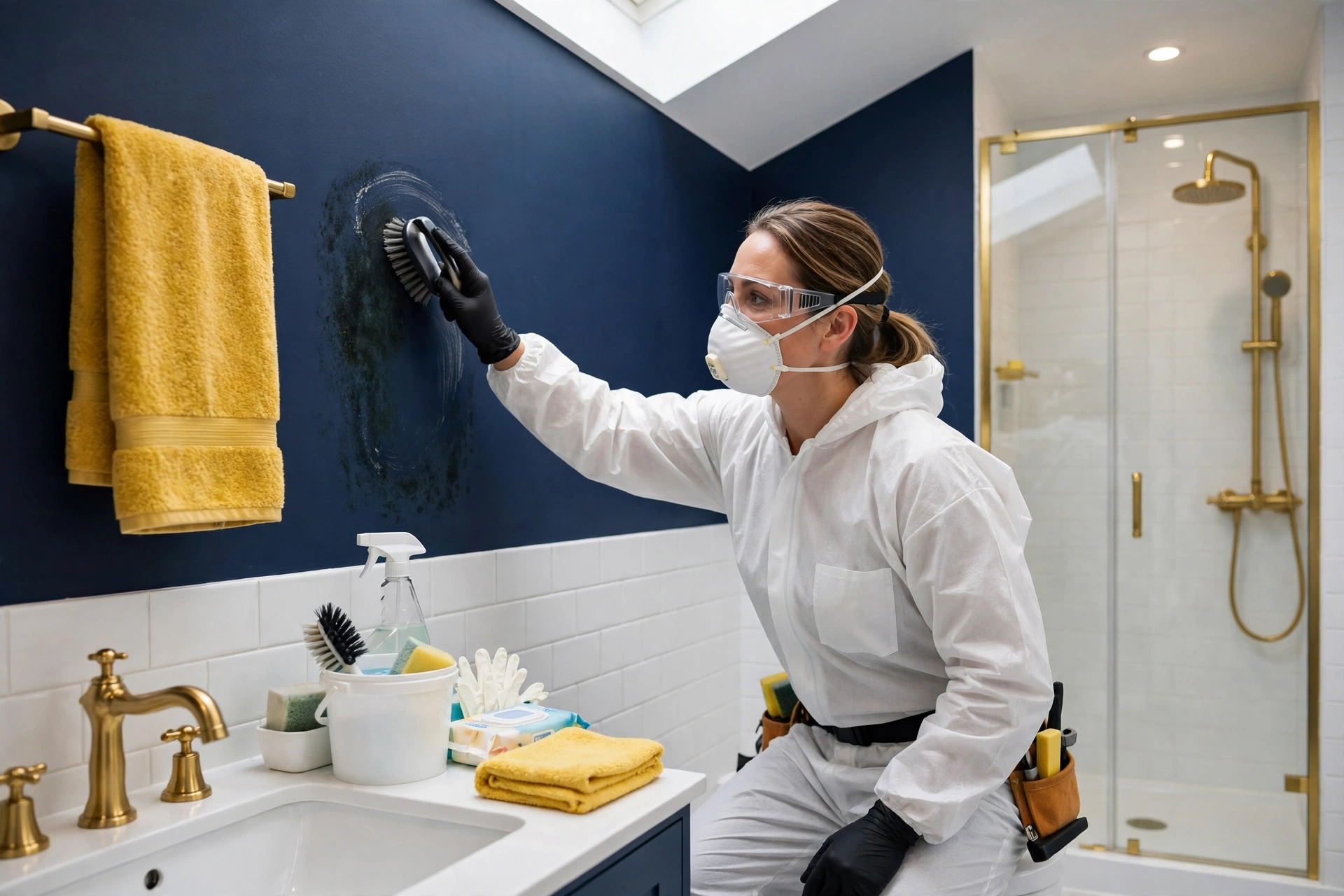
Mold removal is the process of eliminating mold growth and the moisture that feeds it. It starts with finding the water source, then cleaning or discarding affected materials with the right protective gear. Small patches on hard surfaces are safe DIY jobs; large or hidden growth needs a professional. Lasting results depend on drying and humidity control.
This guide defines mold removal and the main indoor mold types. It covers health risks, safety gear and room preparation, the exact cleaning sequence, and which solutions kill mold. It also covers black mold, material replacement, costs, and prevention.
Each section opens with a direct answer, so the guide works for skimming or reading straight through. For more room-by-room projects, browse our home improvement guides.
Key Takeaways
- Mold removal means removing the growth AND fixing the moisture source; cleaning alone does not hold.
- DIY cleanup is safe for patches under about 10 square feet on hard surfaces; larger or hidden mold needs a professional.
- Protect lungs, eyes, and skin with an N95 respirator, goggles, and gloves; never mix bleach with ammonia.
- Dry wet materials within 24 to 48 hours and keep indoor humidity below 60 percent to prevent regrowth.
- Porous materials like soaked drywall and carpet usually need replacing, not scrubbing.
Table of Contents
- What Is Mold Removal?
- Can You Remove Mold Yourself or Should You Hire a Professional?
- What Are the Health Risks of Mold Exposure?
- How Do You Prepare Safely Before Cleaning Mold?
- What Are the Steps for Mold Removal?
- Which Cleaning Solutions Actually Kill Mold?
- What Is Black Mold and Is It More Dangerous?
- When Does Moldy Material Need Replacing Instead of Cleaning?
- How Much Does Professional Mold Remediation Cost?
- How Do You Stop Mold From Coming Back?
- Frequently Asked Questions
- Conclusion
What Is Mold Removal?
Mold removal is the cleanup and repair process that eliminates visible mold and the moisture source behind it. The work has two parts: physically removing the growth from affected materials, and fixing the water problem that let spores settle and multiply. Painting over mold or spraying without cleaning does not qualify as removal.
Mold itself is a type of fungus. Fungi release microscopic spores into the air, and those spores settle on damp surfaces and grow into visible colonies. Common household molds appear as black, green, brown, or white spots on walls, ceilings, grout, wood, and fabrics. Growth needs three things: moisture, an organic food source, and time. Homes supply the food in drywall paper, wood, and dust; moisture is the one factor you can control.
Which Types of Mold Grow in Homes?
Cladosporium, Penicillium, Aspergillus, Alternaria, and Stachybotrys are the mold genera most often found in homes. Cladosporium and Penicillium show up on damp window frames, bathrooms, and stored fabrics. Aspergillus grows on walls, ceilings, and insulation. Alternaria favors showers, sinks, and window sills. Stachybotrys needs constant moisture and grows on paper-covered drywall and wood in water-damaged rooms. These genera appear in the list of common indoor mold genera on Wikipedia.
Can You Remove Mold Yourself or Should You Hire a Professional?
You can remove mold yourself when the patch covers less than about 10 square feet and sits on a hard, non-porous surface. The U.S. Environmental Protection Agency uses this 10-square-foot line in its mold cleanup guidance (Source: U.S. EPA, A Brief Guide to Mold, Moisture and Your Home, 2002). Anything larger, hidden, or in HVAC systems calls for a professional.
Call a professional when the growth is large, when mold hides inside wall cavities or ceilings, when the HVAC system is involved, when sewage or floodwater caused the moisture, or when anyone in the home has asthma, a mold allergy, or a weakened immune system. For small, fully visible patches on hard surfaces with a known and fixed water source, DIY cleaning with proper gear is reasonable.
What Are the Health Risks of Mold Exposure?
Mold exposure can trigger allergic reactions, asthma attacks, and other respiratory problems in sensitive people. Common symptoms include coughing, wheezing, itchy eyes, skin rash, throat irritation, and sinus congestion. People with asthma, mold allergies, weakened immune systems, or chronic lung disease face the highest risk. Even healthy people can develop irritation after heavy or repeated exposure.
Some molds produce mycotoxins, compounds that can pose health risks at high exposure levels (Source: Wikipedia, “Mold”, health effects section, 2026). The literature has not firmly linked specific household mold species to specific diseases, but damp, moldy indoor environments worsen respiratory and allergy symptoms. Treat any visible indoor mold as a cleanup job, not a wait-and-see problem.
How Do You Prepare Safely Before Cleaning Mold?
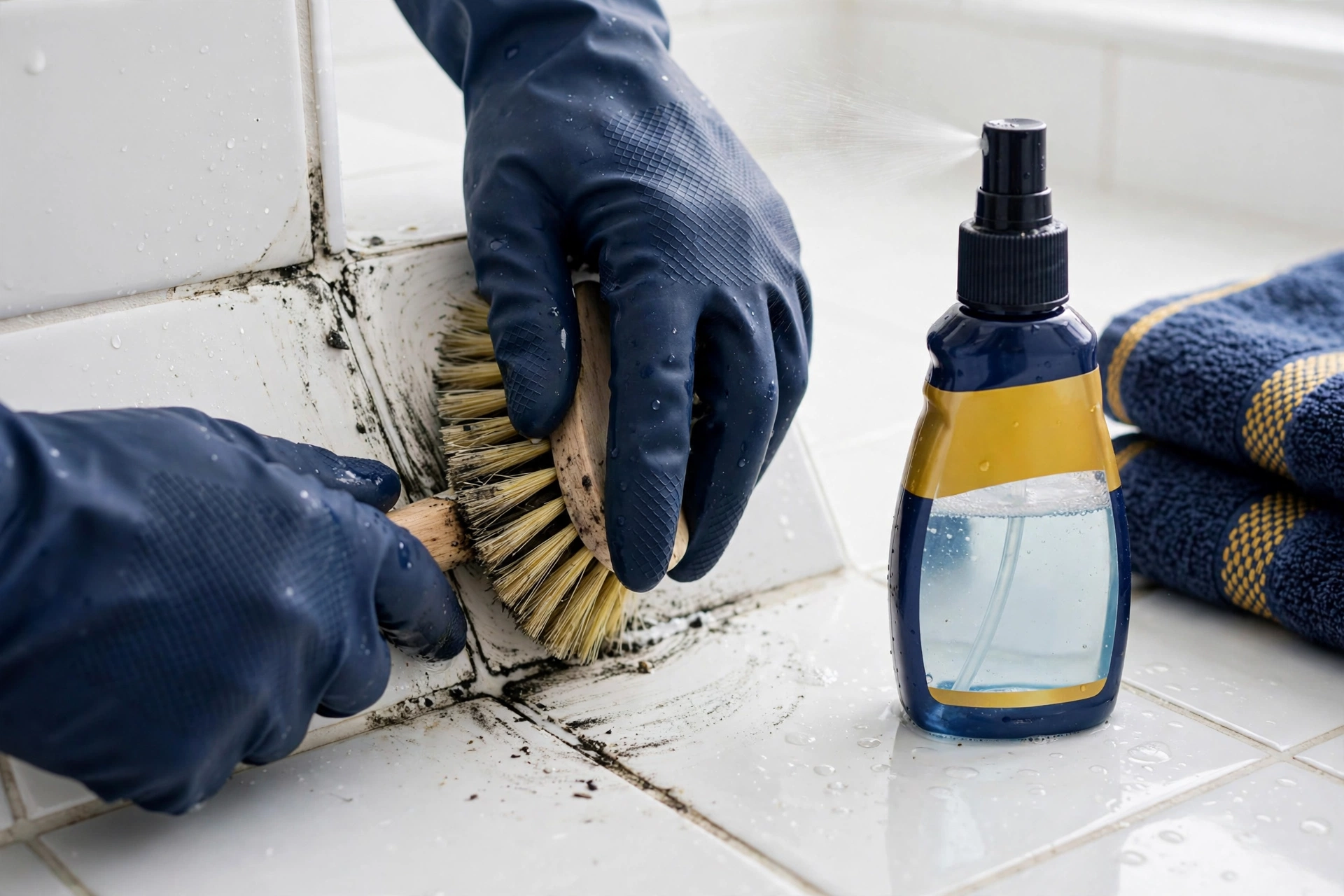
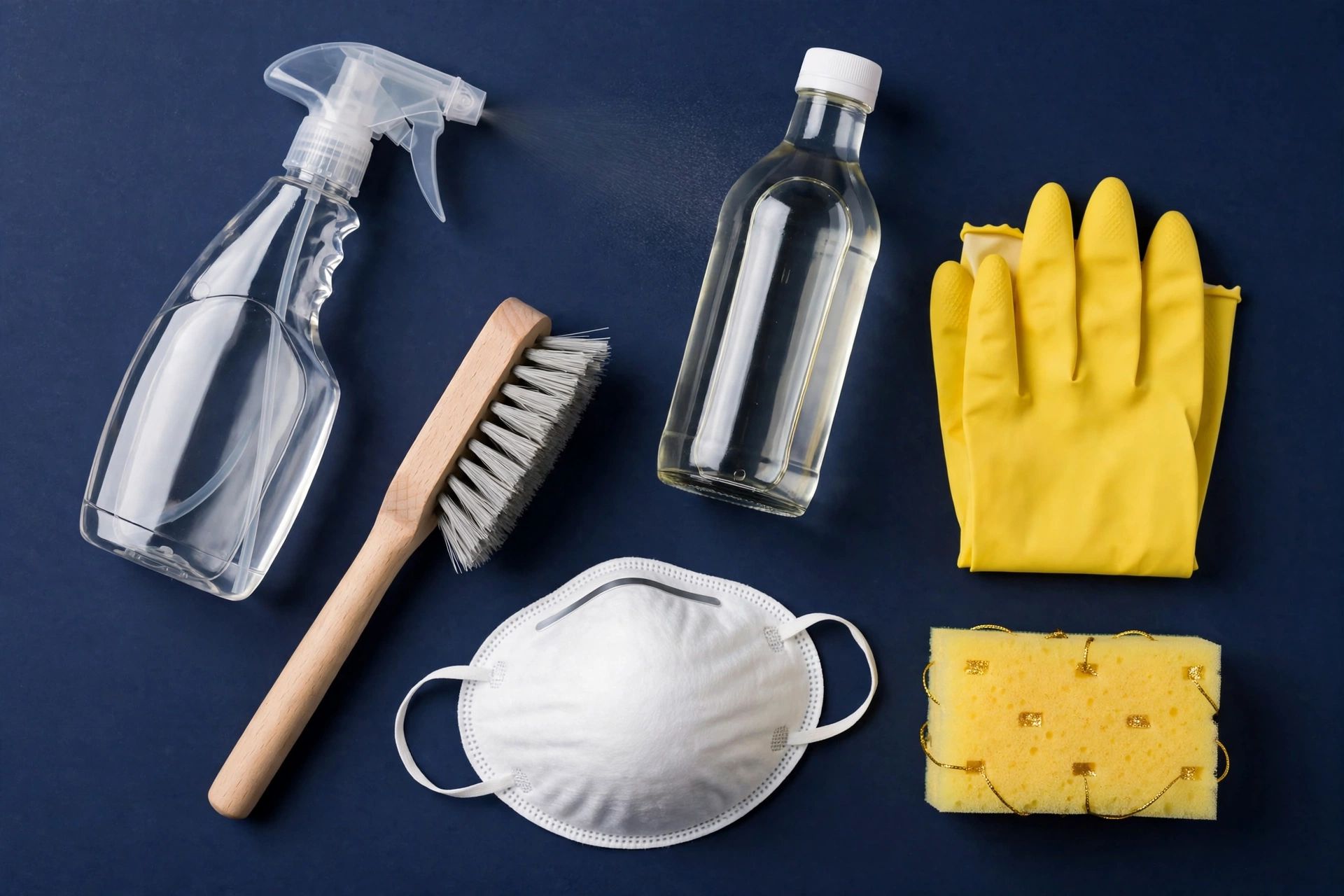
Safe mold cleanup starts with protective gear and isolating the work area. Wear an N95 respirator, goggles without ventilation holes, and rubber gloves. Ventilate the room, keep children and pets out, and seal doorways with plastic sheeting so spores do not drift through the house. Never mix bleach with ammonia; the combination creates toxic vapors (Source: CDC, 2024).
Gather these supplies before you start: an N95 respirator, safety goggles, rubber gloves, plastic sheeting and tape, a spray bottle, a scrub brush, detergent, white vinegar or 3% hydrogen peroxide, a High Efficiency Particulate Air (HEPA) vacuum, fans or a dehumidifier, and heavy-duty trash bags.
What Are the Steps for Mold Removal?
Mold removal follows a fixed order: fix the moisture source, protect yourself, contain the area, clean the growth, dry everything, and verify. Skipping the drying step is the most common reason mold returns. Each step below assumes the patch is small enough for DIY; scale up to professional containment for larger jobs.
- Stop the water: repair the leak or fix the drainage before touching any mold.
- Gear up: put on the N95 respirator, goggles, and gloves before entering the area.
- Seal the room: close doors and vents, tape plastic sheeting over openings.
- Mist the patch: lightly spray the mold with water so scrubbing releases fewer spores.
- Scrub hard surfaces: wash with detergent and water, then apply a mold-killing solution.
- Bag porous debris: double-bag discarded drywall, carpet, or insulation and take it outside.
- Dry completely: run fans and a dehumidifier until the area feels bone dry.
- HEPA vacuum: vacuum the area and nearby surfaces to capture settled spores.
- Watch and verify: check the spot after one week; any return means moisture is still entering.
Different surfaces need different handling:
| Surface | Cleaning approach | Replace instead when |
|---|---|---|
| Tile, glass, metal | Scrub with detergent, then disinfect | Rarely; these surfaces do not absorb moisture |
| Painted drywall or wood | Clean small spots, then dry fully | Mold has penetrated the paint or the board feels soft |
| Unpainted drywall | Surface cleaning is unreliable | Almost always; paper facing feeds mold below the surface |
| Grout and caulk | Stiff brush with cleaner; re-caulk after drying | Grout is crumbling or caulk has pulled away |
| Concrete or brick | Scrub with detergent and a stiff brush | Seal the surface after drying to slow moisture |
| Fabrics and upholstery | Wash in hot water if the care label allows | Odor or staining survives washing |
Mold often follows leaks and floods. Read our fire and water damage restoration guide for the full drying and repair sequence.
Which Cleaning Solutions Actually Kill Mold?
Undiluted white vinegar, 3 percent hydrogen peroxide, and commercial mold removers all kill common household molds on hard surfaces. Detergent and water physically removes growth and is the baseline for hard surfaces. Bleach works on non-porous surfaces like tile but performs poorly on porous materials, because the chlorine stays on the surface while water soaks in and feeds the roots.
| Solution | Best for | Limits |
|---|---|---|
| Detergent and water | Stiff brush with cleaner; re-caulk after drying | Does not disinfect on its own |
| Undiluted white vinegar | Hard surfaces; mild acidity | Limited penetration into porous materials |
| 3% hydrogen peroxide | Stains on hard surfaces; spray, wait 10 minutes, scrub | Can lighten some fabrics and finishes |
| Bleach solution (1 cup per gallon of water) | Non-porous surfaces such as tile | Poor on drywall and wood; never mix with ammonia |
| Commercial mold remover | Labeled uses on hard surfaces | Follow the label; prices vary widely |
Let any solution sit 10 to 15 minutes before scrubbing, then wipe and dry fully. Drying matters more than the product choice.
What Is Black Mold and Is It More Dangerous?
Black mold is the common name for Stachybotrys chartarum, a slow-growing mold that needs constant moisture on cellulose materials like drywall. Some strains produce mycotoxins, but the scientific literature has not firmly established a link between this species and specific human illnesses. Treat it like any indoor mold: remove the growth and fix the moisture.
Stachybotrys grows as dark greenish-black patches with a slimy or sooty look on constantly wet drywall, wallpaper, or wood. Color alone never identifies a species; only laboratory testing does. Testing is optional for cleanup because the removal steps stay the same, but it helps when you need documentation for a sale or an insurance claim. The Stachybotrys chartarum profile on Wikipedia describes its habitat and the research on its health effects.
When Does Moldy Material Need Replacing Instead of Cleaning?
Porous materials with extensive mold growth must be removed and discarded, not scrubbed. Drywall, ceiling tiles, carpet, insulation, and upholstery soak moisture deep below the surface, so cleaning only reaches the top layer. Cut out affected drywall several inches past the visible edge, seal it in bags, and replace the section after the wall cavity is fully dry.
Press suspect drywall with a fingertip; soft or crumbly boards have lost their structure and will not clean up. During a bathroom refresh, I pulled a loose shower tile and found black staining on the drywall behind it. The board was soft when pressed, so I cut that section out instead of scrubbing it, and the mold never returned after the cavity dried.
How Much Does Professional Mold Remediation Cost?
A typical professional mold remediation job costs between about $1,200 and $3,750, with a national average near $2,370 (Source: HomeAdvisor, 2026). Per-square-foot pricing usually lands between $10 and $25. Small bathroom jobs run $500 to $1,000, while jobs behind walls or in HVAC systems climb into the five figures.
| Project | Typical range | |
|---|---|---|
| Small bathroom patch | $500 to $1,000 | |
| Basement | $500 to $3,000 | |
| Crawl space | $500 to $2,000 | |
| Attic | $1,000 to $4,000 | |
| Behind walls | $1,000 to $20,000 | |
| HVAC system | $3,000 to $10,000 |
Ranges are national figures from HomeAdvisor (2026); local bids vary. Size, access, material replacement, and containment setup drive the price, so confirm what a quote includes.
How Do You Stop Mold From Coming Back?
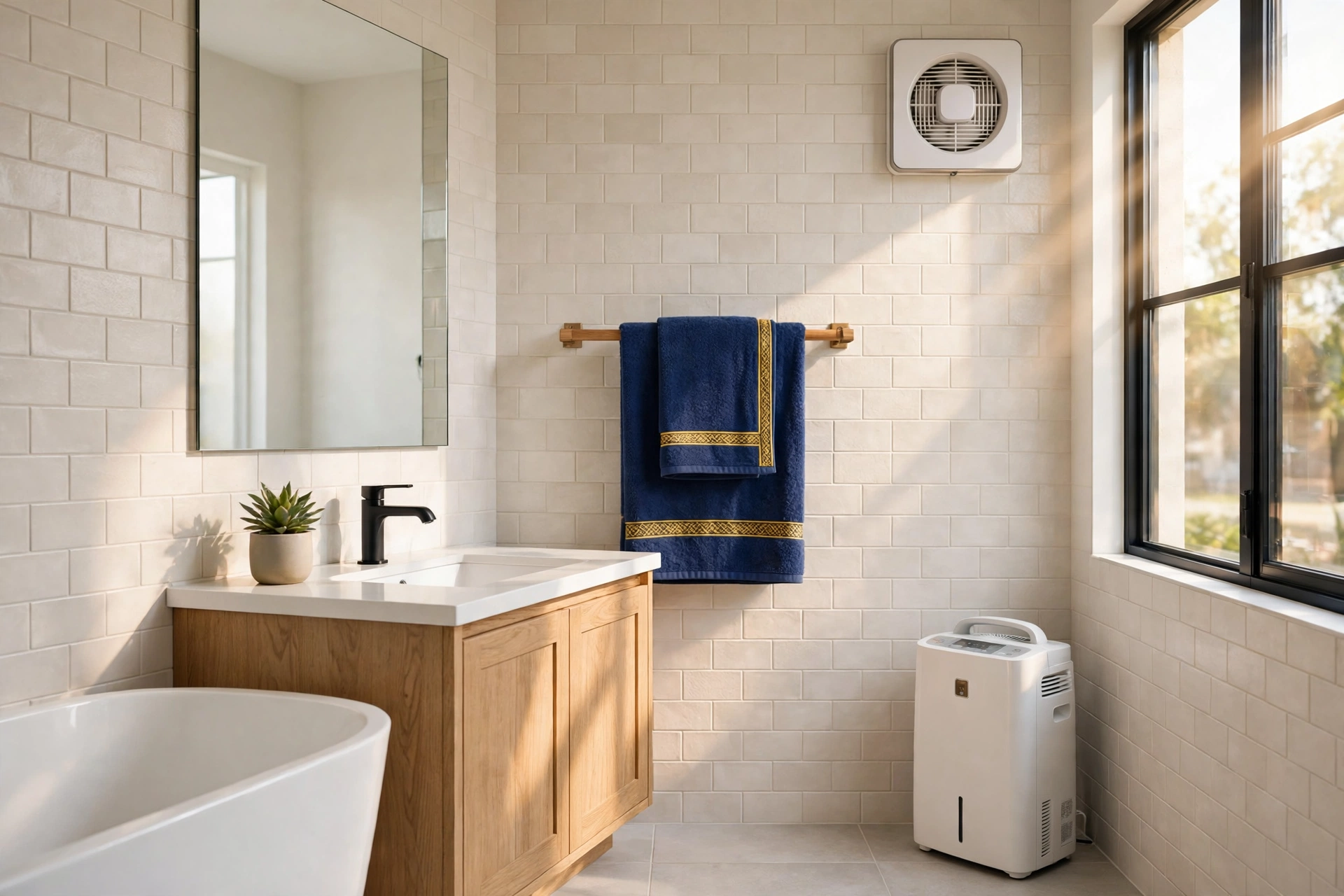
Mold stays away only when indoor moisture stays controlled: fix leaks, dry wet materials within 24 to 48 hours, and keep indoor humidity below 60 percent. The Centers for Disease Control and Prevention (CDC) sets the 24-to-48-hour drying window (Source: CDC, 2024). The EPA recommends humidity between 30 and 50 percent for comfort and mold control (Source: U.S. EPA, 2002).
Work through this prevention checklist after every cleanup:
- Repair roof and plumbing leaks promptly; small drips feed big colonies.
- Run bathroom exhaust fans during and after showers; vent kitchen steam with the range hood.
- Keep gutters clean and grade soil away from the foundation so rainwater drains off.
- Avoid carpet in bathrooms, basements, and laundry rooms.
- Wipe condensation from windows on cold mornings.
- Service the HVAC system and change filters on schedule.
This kind of upkeep is a regular topic at Voice of Wave, where home maintenance gets the same practical treatment.
Frequently Asked Questions
Can you remove mold yourself?
Yes, you can remove mold yourself for patches under about 10 square feet on hard surfaces. Use an N95 respirator, goggles, and gloves, fix the moisture source first, scrub with detergent and water, then dry the area fully. Call a professional for larger patches, hidden mold, or mold in HVAC systems.
Does bleach kill mold?
Bleach kills mold on non-porous surfaces like tile, but it is a poor choice for drywall or wood. The chlorine stays on the surface while the water in the solution soaks into the material and feeds the roots below. Use detergent and water or undiluted vinegar on hard surfaces instead, and replace soaked porous materials.
How long does it take for mold to grow after water damage?
Mold can start growing within 24 to 48 hours on materials that stay wet. The CDC advises drying your home and everything in it as fast as possible within that window (Source: CDC, 2024). This is why fast water extraction after leaks, floods, or spills matters more than the choice of cleaning product.
Does vinegar kill black mold?
Undiluted white vinegar kills many common mold species on hard, non-porous surfaces. Its mild acidity reaches slightly into painted surfaces. It does not reliably kill mold embedded in porous materials like drywall or unsealed wood, and it will not fix the moisture problem. Treat vinegar as a surface tool, not a full remediation method.
How do you know if mold in your home is toxic?
You cannot tell by color whether mold is toxic; only laboratory testing identifies species and their compounds. All indoor mold deserves cleanup regardless of color, because any active growth releases spores that can irritate airways. Consider testing when someone has unexplained respiratory symptoms or when you need documentation for a sale or insurance claim.
Will mold come back after cleaning?
Mold returns after cleaning only when the moisture source is still active. Cleaning kills or removes the visible growth, but spores are always present in indoor air and will recolonize any surface that stays damp. Verify the fix by checking the spot after a week and after the next heavy rain.
Conclusion
Mold removal succeeds as a two-part job: remove the growth with proper safety gear, then remove the moisture that fed it. Small patches on hard surfaces are manageable weekend projects; large, hidden, or recurring mold belongs with a certified professional. Keep humidity low, fix leaks fast, and dry wet materials within two days.
Keep reading: For more room-by-room home projects, browse more home improvement guides.