

Written by James Carter for Voice of Wave
Last updated: October 2026
Introduction
Postpartum recovery is the 6 to 8 week period after childbirth when your body heals and hormones rebalance as you adjust to life with a newborn. Most women need 6 to 12 months for full recovery. Rest, nutrition, gentle movement and wound care speed healing. This guide covers the timeline, warning signs, supplies, food, exercise and emotional health.
The guide defines postpartum recovery, maps a week-by-week timeline, compares vaginal and C-section healing, lists urgent warning signs, and covers supplies, nutrition, exercise, emotional health and partner support. It applies to first-time and experienced mothers, after vaginal or C-section birth.
Key Takeaways
- Postpartum recovery covers roughly 6 to 8 weeks of active healing, with full recovery often taking 6 to 12 months.
- Lochia, afterpains, soreness and fatigue are normal in the first weeks; fever, heavy bleeding and severe headache are not.
- C-section recovery is major abdominal surgery recovery: no lifting, longer wound care, slower return to exercise.
- Eat protein, iron, fiber and calcium-rich foods; drink water at every feeding.
- Baby blues fade within two weeks; low mood lasting longer deserves a call to your clinician.
Table of Contents
- What Is Postpartum Recovery?
- What Is the Postpartum Recovery Timeline?
- How Does Vaginal Birth Recovery Differ From C-Section Recovery?
- What Are the Warning Signs That Need Urgent Medical Care?
- What Should You Stock Up On for Postpartum Recovery?
- How Should You Eat and Drink During Postpartum Recovery?
- When Can You Start Exercising Again?
- How Do You Protect Your Emotional Health After Birth?
- How Can Partners and Family Support Postpartum Recovery?
- Postpartum Recovery: Frequently Asked Questions
- Conclusion
What Is Postpartum Recovery?
Postpartum recovery is the process by which your body returns to its pre-pregnancy state after childbirth, covering uterine healing, wound repair, hormone rebalancing and emotional adjustment. The acute phase lasts 6 to 12 hours, the subacute phase 2 to 6 weeks, and the delayed phase up to 6 months. (Source: Wikipedia, 2026)
The three phases run in sequence: the acute phase (first 6 to 12 hours) monitors bleeding while the uterus stays firm; the subacute phase (2 to 6 weeks) tapers lochia and heals stitches; the delayed phase (up to 6 months) keeps adjusting pelvic floor strength, hair cycles and hormones. The World Health Organization calls the postnatal period the most critical and yet most neglected phase in the lives of mothers and babies. (Source: Wikipedia, 2026)
Between 87% and 94% of women report at least one health problem during the subacute phase. (Source: Wikipedia, 2026) Read the linked overview of the postpartum period for the medical staging behind these phases. For more practical wellness topics, browse the Health guides on Voice of Wave.

What Is the Postpartum Recovery Timeline?
The postpartum recovery timeline runs from birth through about 12 months. Days 1 to 10 bring heavy bleeding, cramps and fatigue. Weeks 2 to 6 taper bleeding and heal wounds. Weeks 6 to 12 add the postpartum checkup and light exercise. Months 3 to 6 rebuild strength, and months 6 to 12 settle hormones and stamina.
| Stage | What is happening | Your focus |
|---|---|---|
| Days 1-10 | Heavy bleeding, afterpains, soreness, milk arriving days 2-5 | Rest, hydration, short walks |
| Weeks 2-6 | Bleeding lightens in color, stitches dissolve, uterus shrinks | Longer walks, pelvic floor exercises, wound care |
| Weeks 6-12 | Surface healing mostly done; deeper healing continues, slower after C-section | Postpartum checkup, light exercise |
| Months 3-6 | Hair shedding common; core and pelvic floor keep strengthening | Progressive exercise, longer sleep stretches |
| Months 6-12 | Hormones stabilize, especially after weaning; joints feel steadier | Full activity for most women, with individual variation |
Your uterus shrinks from about 2.5 pounds back to roughly 2 ounces in the first weeks, and estrogen and progesterone drop sharply, which affects mood, energy and comfort. (Source: Southlake OB/GYN, 2025)
How Does Vaginal Birth Recovery Differ From C-Section Recovery?
Vaginal birth recovery centers on perineal healing, lochia and pelvic floor repair over about 6 weeks. C-section recovery is major abdominal surgery recovery: an incision through skin, muscle layers and uterus, with lifting restrictions, wound monitoring and a longer return to full activity.
| Factor | Vaginal birth | C-section |
|---|---|---|
| Main wound site | Perineum (tears or episiotomy) | Abdominal incision plus uterine incision |
| Hospital stay | Typically 1-2 days | Typically 3-4 days (Source: Wikipedia, 2026) |
| Lifting limit | No heavy lifting for 2 weeks | Nothing heavier than the baby for 4-6 weeks |
| Pain management | Ice packs, sitz baths, perineal rinses | Prescribed medication, pillow support when coughing |
| Exercise restart | Short walks within days; cleared at 6-week checkup | Short walks within days; cleared at 6-8 week checkup |
| Key watch-outs | Perineal infection, hemorrhoids, urinary leakage | Incision redness, swelling, discharge, fever |
| Full recovery feel | Mostly healed by 6-8 weeks for many | Full comfort often takes 8-12 weeks |
About 33% of all women experience postpartum urinary incontinence, and vaginal delivery roughly doubles the likelihood versus C-section. (Source: Wikipedia, 2026) Kegel exercises are recommended to strengthen the pelvic floor muscles and control it. (Source: Wikipedia, 2026) Tampons and menstrual cups are not recommended during lochia because they can introduce bacteria. (Source: Wikipedia, 2026)
What Are the Warning Signs That Need Urgent Medical Care?
Warning signs that need urgent medical care are: soaking through a pad every hour for 2 or more hours, fever of 100.4 F (38 C) or higher, severe headache or vision changes, chest pain or shortness of breath, a swollen painful leg, or thoughts of harming yourself or the baby. Call your clinician or emergency services for any of these.
| Sign | Threshold or detail | Action |
|---|---|---|
| Heavy bleeding | Soaking a pad every hour for 2+ hours, or passing large clots | Emergency care now (Source: The Grow Her, 2026) |
| Fever | 100.4 F (38 C) or higher | Call your clinician the same day (Source: The Grow Her, 2026) |
| Headache or vision changes | Severe, sudden, or with upper abdominal pain | Emergency care: possible preeclampsia |
| Chest pain or trouble breathing | Any new onset after birth | Emergency care now |
| Leg symptoms | One leg swollen, red, warm or painful | Same-day evaluation: possible blood clot |
| Mood | Thoughts of harming yourself or the baby | Emergency care or crisis line now |
An increase in lochia between days 7 and 14 can indicate delayed postpartum hemorrhage, so bleeding that gets heavier instead of lighter deserves a call. (Source: Wikipedia, 2026) Save your clinician’s after-hours number in your phone before delivery.
What Should You Stock Up On for Postpartum Recovery?
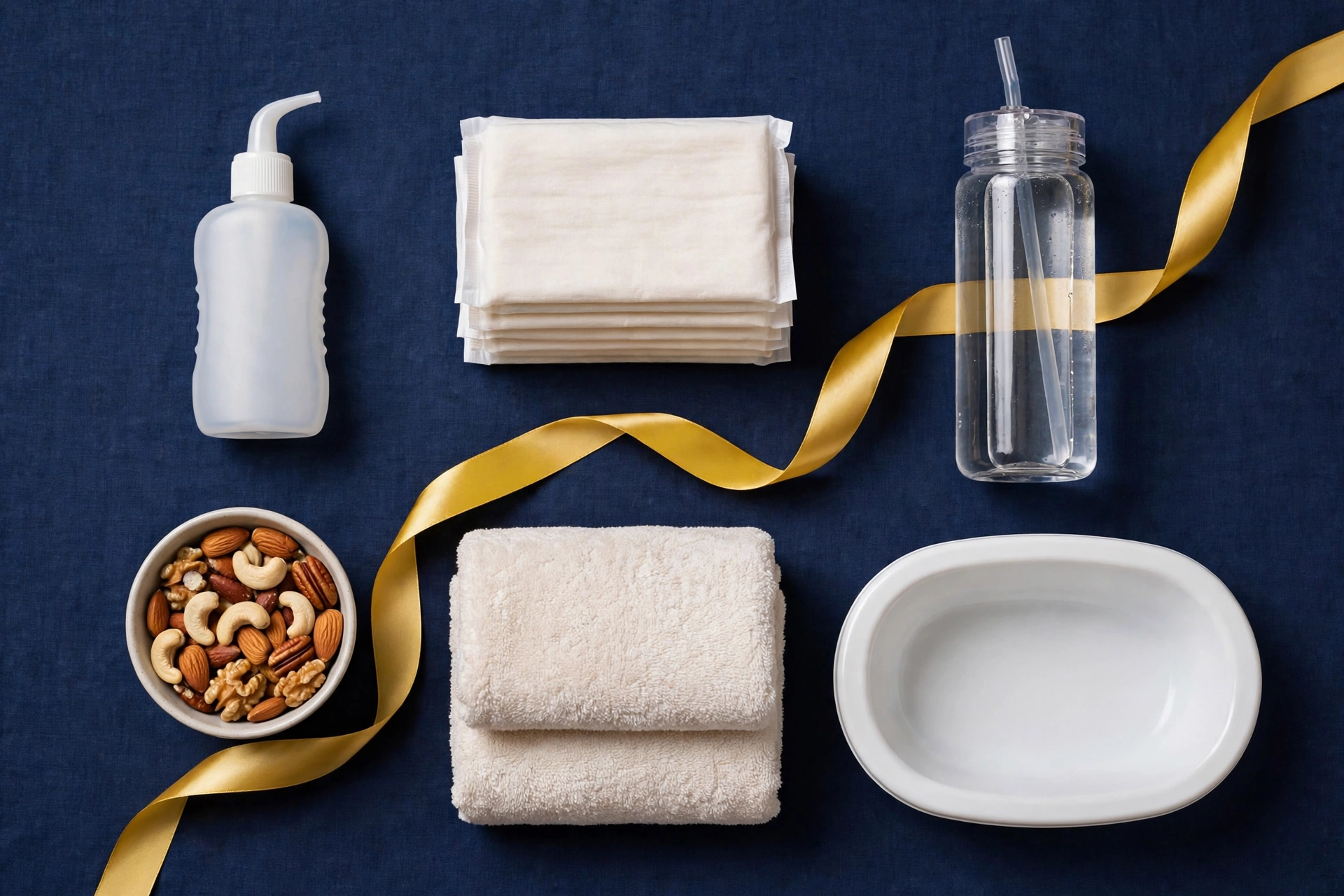
A postpartum recovery kit should include: heavy maternity pads and high-waisted underwear, a peri bottle, a sitz bath basin, witch hazel pads or cold packs, a water bottle with a straw, protein snacks, stool softeners (clinician-approved), nursing-friendly clothing, and a donut pillow.
- Maternity pads and high-waisted underwear: buy for several weeks of lochia.
- Peri bottle: rinse with warm water after using the toilet.
- Sitz bath basin: warm shallow soaks ease perineal pain.
- Cold packs or witch hazel pads: reduce swelling in the first days.
- Water bottle with a straw: drink at every feeding.
- Protein snacks within reach: nuts, cheese, boiled eggs, yogurt.
- Stool softener: ask your clinician before using any.
- Loose, nursing-friendly clothing: soft fabrics that open at the front.
- Donut pillow: sits you up without pressing on stitches.
Practical tip: set up one feeding station per floor with a water bottle, snacks, pads and the peri bottle, because the night feeds in week two are when supplies run out fastest. Buy heavy pads in bulk.
How Should You Eat and Drink During Postpartum Recovery?
To eat well during postpartum recovery, build meals around protein, iron, fiber, calcium and water. Aim for 3 balanced meals plus 2 protein snacks daily, about 8 to 10 glasses of water, and iron-rich foods such as lentils, beans and spinach.
- Protein: eggs, yogurt, chicken, fish, lentils, tofu; both tissue repair and milk production need it.
- Iron: lentils, beans, spinach, red meat, fortified cereals; delivery depletes iron stores.
- Fiber plus water: oats, fruit, vegetables, whole grains; constipation and hemorrhoids are common after birth. (Source: Wikipedia, 2026)
- Calcium and vitamin D: dairy, fortified milk, leafy greens; bones lose density during breastfeeding.
- Healthy fats: nuts, seeds, olive oil; steady energy for broken sleep.
Drink a full glass of water at every feeding. Keep caffeine moderate and limit alcohol while breastfeeding. If appetite is low, eat smaller meals more often.
When Can You Start Exercising Again?
Start exercising with short walks within days of birth, add pelvic floor and deep-core breathing in weeks 2 to 6, and return to strength training and low-impact cardio after your 6-week checkup clears you. Avoid heavy lifting, crunches and high-impact exercise until cleared, typically around 6 to 12 weeks.
| Stage | Safe activity | Avoid |
|---|---|---|
| Days 1-14 | Short flat walks, ankle circles, deep breathing | Lifting, excess stairs, long standing |
| Weeks 2-6 | Longer walks, Kegel exercises, pelvic tilts lying down | Running, crunches, heavy housework |
| After 6-week checkup | Brisk walking, swimming, postpartum yoga, light weights | Contact sports until fully cleared |
| Months 3-6 | Progressive strength training, running if the pelvic floor is ready | Pushing through pain, leaking or heaviness: scale back |
Diastasis recti, the separation of the abdominal muscles, affects many women after birth; crunches and planks can widen it, so a postpartum physiotherapist is the right guide for core rebuilding. Stop and call your clinician if exercise causes increased bleeding, sharp pain or pelvic heaviness.
How Do You Protect Your Emotional Health After Birth?
To protect your emotional health after birth, expect mood swings in the first 2 weeks, sleep in shifts, and call your clinician if sadness or anxiety lasts beyond 2 weeks. Baby blues affect 70% to 80% of new mothers and fade on their own. (Source: Wikipedia, 2026)
Baby blues bring tearfulness, irritability and worry in the first days and lift within 2 weeks. Postpartum depression is different: persistent sadness, low energy, anxiety, crying episodes and appetite or sleep changes lasting 2 weeks or more. (Source: Wikipedia, 2026) It affects roughly 15% of births, and fathers and partners can be affected too. (Source: Wikipedia, 2026) Read the clinical overview of postpartum depression to learn its signs and treatment options.
Protective steps that work:
- Sleep in shifts: one uninterrupted 4-hour block helps mood more than total hours.
- Say yes to help: meals, laundry, holding the baby while you shower.
- Talk early: tell your partner or clinician at the first 3-week contact. ACOG recommends provider contact within the first 3 weeks postpartum, then a fuller visit at 4 to 12 weeks. (Source: Wikipedia, 2026)
If low mood, panic or intrusive thoughts last beyond two weeks, read our guide to behavioral therapy for evidence-based treatment approaches.
How Can Partners and Family Support Postpartum Recovery?
Partners and family help most by taking over logistics, guarding sleep, watching for warning signs, and offering specific help such as meals, laundry, night shifts and visitor management. The most useful support is concrete action taken without being asked, especially in the first month when exhaustion is highest.
- Own the kitchen and laundry: recovery stalls when the mother runs the household.
- Take a night shift: bottle-feed or bring the baby for nursing, then settle the baby.
- Guard rest: limit visitors in the first 2 weeks and enforce nap time.
- Learn the warning signs: fever, heavy bleeding, severe headache, dark mood changes; speak up early.
- Watch the mother, not just the baby: ask how her body and mood feel, then listen.
- Keep criticism out: feeding choices and house standards are not up for debate in month one.
Support people need recovery too: fatigue and mood changes hit partners as well. Plan shifts before the birth so no one negotiates at 3 a.m.
Postpartum Recovery: Frequently Asked Questions
How long does postpartum recovery take?
Active healing takes about 6 to 8 weeks, with lochia, stitches and soreness mostly resolving. Full recovery, covering hormones, pelvic floor strength and stamina, often takes 6 to 12 months. Twins or a C-section extend the timeline. (Source: Wikipedia, 2026)
How long does postpartum bleeding last?
Postpartum bleeding (lochia) usually lasts 4 to 6 weeks. It starts bright red, turns pink then brown, then yellow-white before stopping. Bleeding that increases between days 7 and 14, or soaking a pad hourly, needs same-day review. (Source: Wikipedia, 2026)
Can you take a bath during postpartum recovery?
No, not until your clinician clears you, usually at the 6-week checkup. Tub soaking can introduce bacteria into the healing uterus and perineal wounds. Showers are safe from day one. Shallow sitz baths for the perineum are a separate, clinician-approved option for soreness.
When can you have sex after giving birth?
Most clinicians advise waiting until bleeding stops and the 6-week checkup confirms healing, roughly 4 to 6 weeks after vaginal birth and longer after C-section. Comfort, lubrication and contraception matter. Note: fertility can return before the first period, especially if you are not breastfeeding.
What is the difference between baby blues and postpartum depression?
Baby blues affect 70% to 80% of new mothers, start within days of birth, and fade within 2 weeks. Postpartum depression affects roughly 10% to 20%, starts within the first month, and brings persistent sadness or detachment lasting 2 weeks or more. It needs treatment. (Source: Wikipedia, 2026)
What should you eat during postpartum recovery?
Eat 3 balanced meals plus 2 protein snacks daily, with protein, iron, fiber, calcium and 8 to 10 glasses of water. Iron-rich foods like lentils and spinach rebuild blood stores; fiber plus water prevents constipation. Keep caffeine moderate and limit alcohol while breastfeeding.
Conclusion
Postpartum recovery is the 6 to 8 week healing process after childbirth, with full recovery often taking 6 to 12 months. Vaginal and C-section recoveries differ in wound site, restrictions and pace, but both need rest, nutrition, gentle movement and wound care. Clear warning-sign thresholds tell you when to call. Emotional health needs the same attention as physical healing: baby blues fade, but low mood past 2 weeks deserves a call. For more everyday health guidance, Voice of Wave covers topics that matter to general readers.
Explore the latest practical guides on the Voice of Wave blog.